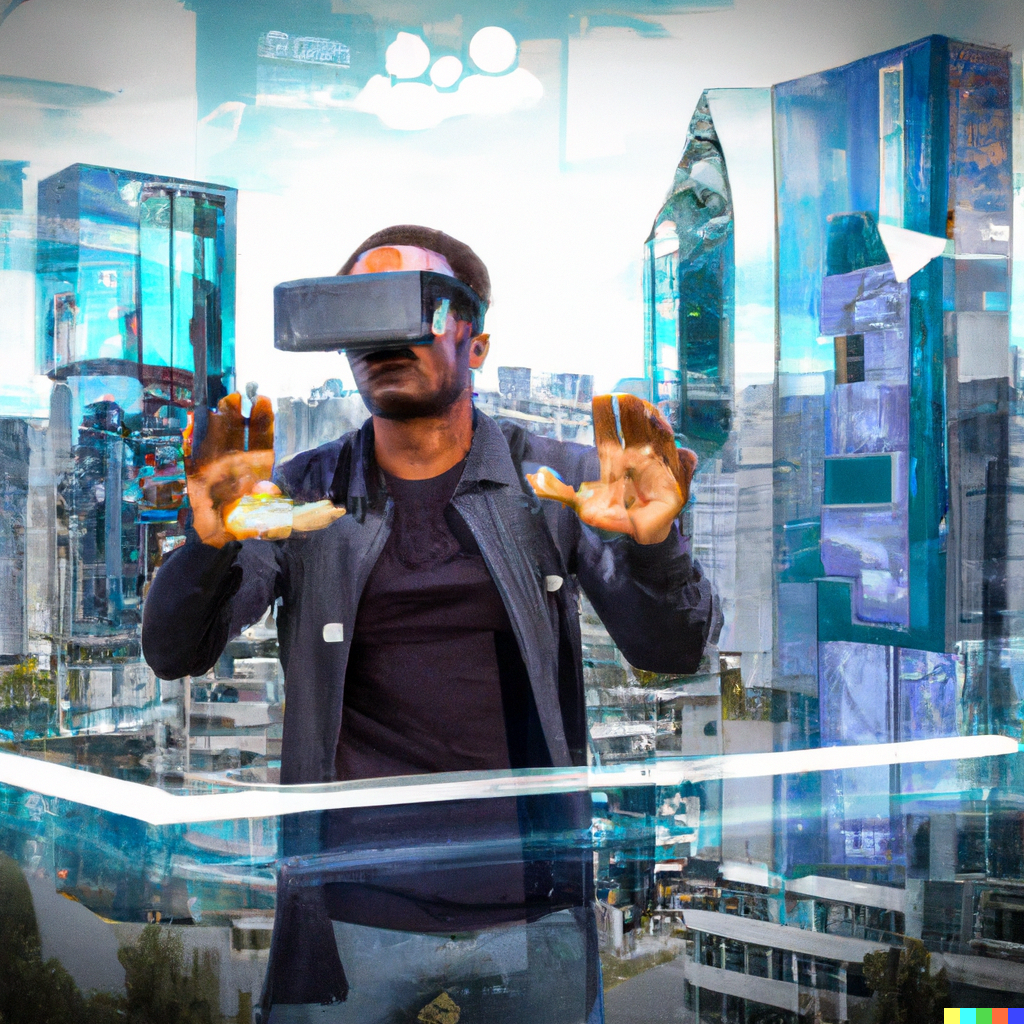
This article explores the world of Augmented Reality (AR), Virtual Reality (VR), and Mixed Reality (MR), explaining how each technology works and how they are transforming industries such as education, healthcare, retail, and manufacturing. It highlights key innovations, current challenges, and the future potential of immersive experiences as XR continues to reshape the way we work, learn, and interact with digital content.
Over the past decade, immersive technologies have moved from science-fiction concepts to widely adopted tools across industries. Together, Augmented Reality (AR), Virtual Reality (VR), and Mixed Reality (MR)—often grouped under the umbrella term Extended Reality (XR)—are transforming the way we learn, work, shop, play, and interact with digital content. As hardware becomes more compact and software grows more intelligent, the opportunities for XR adoption continue to expand at an exponential pace.
This article explores the fundamentals of AR/VR/MR, their real-world applications, current technological challenges, and the trajectory of XR in the years ahead.
1. Understanding the XR Spectrum
Augmented Reality (AR): Enhancing the Real World
AR overlays digital information onto a user’s physical environment. Unlike VR, it doesn’t replace reality—it enhances it.
How AR Works:
- Uses devices like smartphones, tablets, or AR glasses.
- Sensors detect surfaces, objects, and motion.
- Digital elements (images, text, animations) appear over real-world scenes.
Popular Examples:
- Snapchat and Instagram filters
- Pokémon GO
- IKEA Place (furniture visualization)
- Google Maps AR walking directions
The appeal of AR lies in its accessibility—nearly every smartphone can run AR apps.
Virtual Reality (VR): Immersing in a Digital World
VR transports users into fully computer-generated environments, shutting out the physical world entirely.
How VR Works:
- Requires headsets such as Meta Quest, HTC Vive, or PlayStation VR.
- Uses motion tracking, stereoscopic displays, and spatial audio.
- Often paired with controllers or hand-tracking systems.
Popular Uses:
- Gaming and entertainment
- Virtual tours (real estate, travel)
- Clinical therapy (PTSD, phobia treatment)
- Education and skill training
VR offers unmatched immersion, making it ideal for situations where full presence and isolation are beneficial.
Mixed Reality (MR): Blending Digital and Physical Interactivity
MR sits between AR and VR, allowing digital objects to not just appear in the real world but interact with it in meaningful ways.
Key Characteristics:
- Digital objects respond to physical surfaces.
- Users can manipulate holograms like real objects.
- Requires advanced headsets (e.g., Microsoft HoloLens, Magic Leap).
Use Cases Include:
- Industrial training
- Remote collaboration with spatial mapping
- Scientific and medical visualization
- Architectural design and simulation
MR offers a more advanced and interactive fusion of digital and physical worlds than AR alone.
2. How AR/VR/MR Are Transforming Industries
Education & Training
- VR enables immersive simulations for surgical procedures, hazardous environments, and mechanical operations.
- AR helps students visualize complex concepts like molecular structures or historical battles.
- MR enhances vocational training with interactive holographic overlays on equipment.
Healthcare
- AR assists surgeons with real-time guidance and 3D anatomical overlays.
- VR therapies treat PTSD, anxiety, chronic pain, and phobias.
- MR supports medical education with interactive 3D anatomy models.
Retail & E-Commerce
- AR try-before-you-buy solutions (glasses, clothing, furniture).
- VR showrooms and virtual malls offer immersive shopping experiences.
- MR prototyping helps designers visualize products faster.
Manufacturing & Engineering
- AR step-by-step instructions reduce assembly errors.
- MR supports remote expert assistance for maintenance.
- VR enables digital twins and virtual prototyping.
Entertainment & Social Interaction
- VR gaming has matured with multiplayer worlds and realistic physics.
- AR powers interactive live events and location-based experiences.
- MR introduces new forms of spatial computing for creative arts.
Real Estate & Architecture
- Virtual property tours reduce travel and improve decision-making.
- MR overlays allow architects to test designs within real environments.
3. Key Technologies Powering XR
Spatial Mapping
The ability to understand and track physical spaces makes MR and advanced AR possible.
AI & Machine Learning
AI enhances hand tracking, gesture recognition, scene understanding, and adaptive content.
5G Connectivity
Low latency enables high-resolution cloud rendering and real-time multiuser interactions.
Haptics
From vibration to full-body suits, haptic feedback deepens immersion.
Eye-Tracking & Foveated Rendering
Improves graphics efficiency by rendering what the eye focuses on in high detail.
4. Current Challenges in XR
While XR is rapidly advancing, several hurdles remain:
1. Hardware Limitations
- High costs for advanced devices
- Bulky headsets or limited battery life
- Need for improved field of view and comfort
2. Content Ecosystem
- Building XR applications requires specialized skills
- Lack of standardized development frameworks
3. Motion Sickness & User Fatigue
- Caused by mismatches between visual input and physical motion
4. Privacy & Ethical Considerations
- Spatial data collection raises concerns
- User safety and psychological well-being require attention
5. The Future of AR, VR, and MR
The XR landscape is moving toward spatial computing—a world where digital content naturally integrates with physical environments. Key trends shaping the future include:
1. Lighter, More Comfortable Wearables
Smart glasses may eventually replace smartphones for everyday tasks.
2. AI-Powered Adaptive Experiences
Context-aware AR that customizes interactions in real time.
3. Workplace Integration
XR tools will become mainstream for training, collaboration, and operations.
4. The Rise of the Metaverse
Persistent virtual spaces where users work, play, and socialize.
5. Cross-Platform XR Ecosystems
Interoperability will allow users to move seamlessly between devices and environments.
Conclusion
AR, VR, and MR represent a monumental shift in how we interact with technology. Whether enhancing our perception of the real world, immersing us in fully digital environments, or allowing us to blend the two, XR technologies are reshaping industries and daily experiences alike.
As hardware improves, content expands, and AI deepens the intelligence of XR systems, these immersive technologies will play an even larger role in education, medicine, entertainment, design, and beyond. We are only at the beginning of a transformation that will fundamentally redefine how humans engage with the world around them.